The patterns that limit a team usually stay invisible. They surface later as slow decisions, silos, and meetings that change nothing.
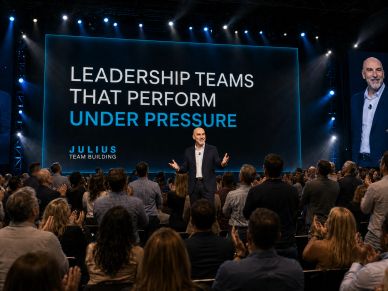
JULIUS TEAM BUILDING works differently. Julius designs, performs, and facilitates live, magic-infused experiences himself — just Julius in the room with your people.
A live piece of magic gives the whole room the same moment to study: what people noticed, what they missed, what they assumed, and how quickly a group can build confidence around the wrong picture.
It works at any scale — a single team, an executive retreat, or a keynote audience. For many teams, the experience itself creates the value.
For senior teams, this becomes leadership team development in Jacksonville — the same method, aimed at how a leadership team communicates, decides, and delivers under pressure.
The starting point is seeing which of these patterns run your team, and The Red Flags Screening below measures exactly that.